Biophilic Design for Small Spaces Without the Green Thumb
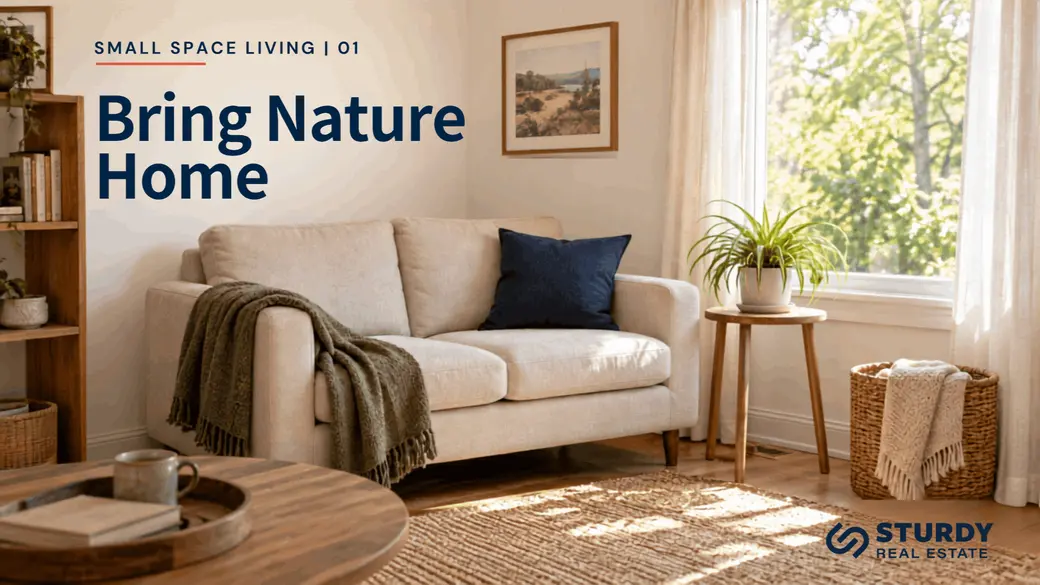
Biophilic Design for Small Spaces Without the Green Thumb
Small Space Living Part 1 of 3
A small home can feel connected to nature without a windowsill full of plants to keep alive. Start with the daylight, views, and furniture you already have. If keeping a fern alive sounds like another chore, you have options.
What is biophilic design
Biophilic design connects indoor spaces with nature through daylight, outdoor views, plants, natural materials, and nature-inspired shapes or patterns. These are among the connections described in Terrapin Bright Green’s design framework.
In a small space, use those ideas selectively. A clear view outside, a wooden side table, and one well-placed plant can be a manageable starting point. Keep the walking paths and everyday surfaces usable.
Start with the view you already have
Look toward the window from your favorite seat. Could a change give you a better view? Try one of these adjustments:
- Move a tall piece of furniture away from the window if the layout allows.
- Open curtains fully during the day while keeping the privacy you need.
- Angle a reading chair toward a tree, garden, or patch of sky.
- Clear part of the windowsill so the view has room to be noticed.
If the view is limited, bring an outdoor scene into the room through art or a photograph. A photo you took near Table Rock Lake or on an Ozarks trail can make the space feel more personal, too.
Use current trends in small doses
Houzz’s 2026 trend report highlights warm wood tones, earthy colors, textured materials, and interiors that combine older pieces with new ones. Try translating those ideas into a small refresh:
|
Design direction |
Affordable way to try it |
A choice you can keep |
|
Warm wood |
Reuse a wooden tray or look for a secondhand picture frame. |
Keep useful wood furniture you already enjoy. |
|
Nature-inspired color |
Try olive, muted blue, or clay in one cushion cover or print. |
Build around colors that work with your existing floors and furniture. |
|
Natural texture |
Repurpose a woven basket for blankets or everyday storage. |
Choose pieces that have a practical job as well as visual appeal. |
For a look that lasts, keep your larger pieces and repeat a few colors or materials throughout the room. Smaller accents are easier to change as your taste evolves. You can try this approach without repainting every wall or replacing a perfectly good sofa.
Choose a plant that fits your light and routine
Start with one plant and choose its location before you shop. Check both the available light and the plant’s mature size. These three options offer different shapes and care needs:
|
Plant |
Small-space use |
Light and watering basics |
|
An upright variety can fit beside furniture without spreading far into a walkway. |
Handles bright or lower light. Let the potting mix dry between waterings. |
|
|
Choose a compact variety for a tabletop and check its eventual width. |
Bright indirect light is best, though it tolerates lower light. Let the mix dry before watering again. |
|
|
Cascading leaves suit a shelf or secure hanging planter. |
Prefers bright indirect light. Keep the mix lightly moist and empty excess water. |
Check the soil before watering instead of following the same schedule for every plant. Use pots with drainage and avoid leaving them in standing water.
Have pets? Snake plants and ZZ plants are toxic to cats and dogs if eaten. The ASPCA lists spider plants as non-toxic to both. Check the exact plant before bringing it home.
Try a simple project before buying more decor
Make your own nature print. Choose an outdoor photo from your phone, crop it to fit a frame you already own, and print it. A single larger image can give a small wall a clear focal point.
Give a useful object a new home. Move a wooden bowl to the entryway for keys, or use an existing woven basket to gather throws beside the sofa. Both add texture while helping contain everyday clutter.
Build around one small purchase. If you want to buy something, choose the gap that matters most: a plant suited to your room, a replacement cushion cover, or a secondhand wood accent. Try that change before adding another.
Picture it in a compact living room
Imagine a living room with one window, a crowded side table, and a basket that currently stores nothing. Here is a simple arrangement to try:
Move the chair slightly so it has a view outside and leaves the walkway clear.
Clear the side table and add one small plant if the light is suitable.
Put loose throws in the basket and tuck it beside the sofa.
Hang your outdoor photo where it is visible from your favorite seat.
The aim is to give the nature-inspired details a place in the room while keeping everyday surfaces usable.
Common questions about biophilic design
Can I use biophilic design without live plants?
Yes. Daylight, views of nature, wood, woven materials, and nature-inspired artwork can all be part of the approach. Choose the elements that fit your home and the amount of upkeep you want.
Will biophilic design make a small room feel bigger?
It can contribute to a more open feeling when windows, sightlines, and walking paths stay clear. The layout matters: adding oversized plants or filling every surface can make the same room feel more crowded.
What is the most affordable place to start?
Start with what you own. Clear the window area, move a chair toward an outdoor view, or repurpose a wooden or woven item. Then decide whether the room needs anything else.
Start with one corner. Make it comfortable, useful, and connected to something you enjoy outdoors. A small change that works with your daily life is a good place to begin.
Next in our Small Space Living series: using light, sound, and scent thoughtfully to make a small room more comfortable.
Looking for a home in Springfield or Southwest Missouri that fits your everyday life? Visit Sturdy Real Estate or call 417-881-3061.
Categories
Recent Posts