How to Create Zones in a Small Space Without Adding Walls
Small Space Living Part 3 of 3
Small rooms often have more jobs than square footage. Your dining table may also be your desk, while the living room has to make space for movie nights, hobbies, and the occasional overnight guest. It helps to decide where each activity belongs, even when the room has to change jobs during the day.
Zoning a small space means defining areas for different activities through furniture placement, rugs, lighting, or storage. Start with the uses that matter most, keep walking paths open, and give shared surfaces an easy way to reset. You can try it without building walls or replacing your furniture.
Decide which activities need their own space
List what the room needs to do during a normal week. Then ask which activities happen at the same time. Two people working at home may need separate places to sit. A dining table used for occasional paperwork may simply need a nearby place to store the papers.
Give the most frequent activity the easiest setup. If you read every evening and host overnight guests twice a year, arrange the room around everyday comfort and keep a workable guest setup in mind. A room that takes twenty minutes to rearrange every morning may need a simpler plan.
Give each area one clear cue
A zone can be recognizable without a physical divider. Start with a cue that explains how the area is used. IKEA’s studio planning guide shows how rugs and the angle of a sofa can help define functional areas. Try one change at a time so you can tell what improves the layout.
|
Area you need |
A simple way to define it |
|
A place to relax |
Group the sofa, chair, and coffee table around one rug you already own. |
|
A place to work |
Use a desk or one end of a table, with work supplies stored within reach. |
|
A place for meals |
Keep the tabletop easy to clear and leave room to pull out the chairs. |
|
A place for hobbies |
Keep supplies together in a portable tray or bin that can be put away. |
Keep a few colors or materials consistent across the room so the areas still feel connected. A work corner can have its own purpose without needing its own completely different decorating style.
Use furniture to mark an edge
Try turning an armchair toward the sofa to make a seating group, or placing a desk against a side wall so work has a clear home. If the room has enough depth, the back of a sofa can help mark the edge of the living area.
Check what the change costs you in usable space. A sofa can stay against the wall when that gives you a better walking path. You can still define the seating area with the rug and the direction the chairs face. Avoid adding a console or shelf solely to make the boundary more obvious.
Test the space around the furniture
Furniture needs room to be used. Pull out the desk chair, open the cabinet, and walk through the room carrying a laundry basket. Check whether someone can pass while another person is seated at the table. Leave space for the way the people in your home actually move, including any mobility aids.
Measure the furniture and the space around it before buying a new piece. Keep door swings and vents clear, and route lamp cords away from walking paths. If reaching the sofa requires a sideways shuffle, adjust the layout before adding another zone.
Make shared surfaces easy to reset
When one table handles work and meals, give work supplies a place to go at the end of the day. Use a box, basket, or shelf you already have for the laptop, charger, and notebook. Choose a spot close enough that putting things away feels easy.
This also works for hobbies. A tray can hold a project while you use the table, then move to a shelf when you need the surface back. If several people share the room, agree on when the table needs to be clear. The storage and the routine help the same area serve different purposes.
Add a divider only when you need more privacy
A folding screen may help hide a sleeping area or a busy work corner. Check its footprint both open and folded, and consider whether it will block the room’s daylight. Visual separation will not provide the sound isolation of an enclosed room.
If you consider shelving as a divider, check that the unit is designed for that use and follow its installation and anchoring instructions. The Consumer Product Safety Commission advises securing furniture according to the manufacturer’s instructions. A piece that requires wall anchoring needs a layout that allows it.
Try the layout during a normal week
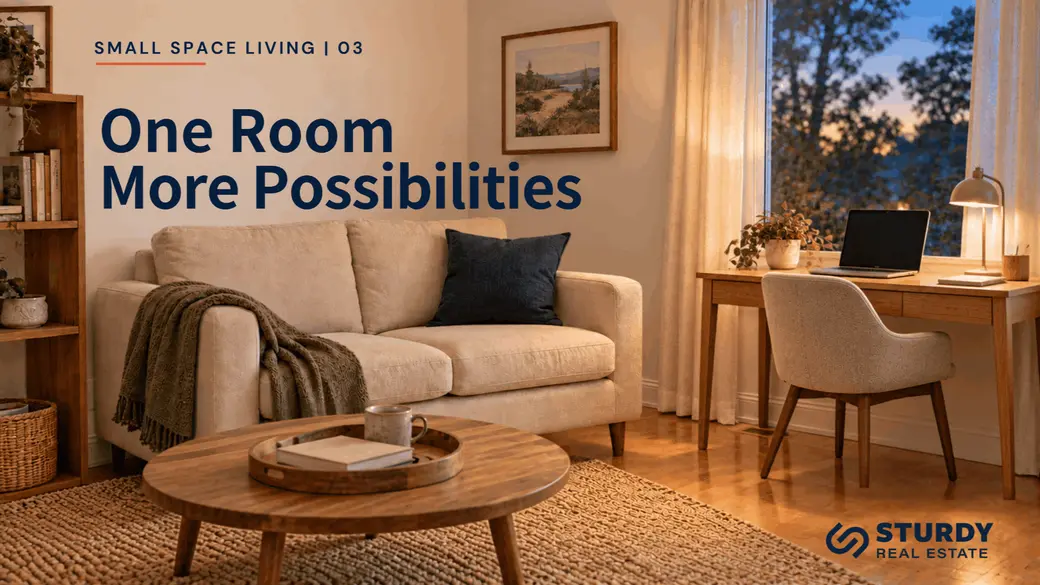
Imagine a small living room with a sofa, coffee table, and a compact table by the window. The sofa and coffee table form the relaxing area. The window table handles work during the day and meals later, with work supplies stored on a nearby shelf. The chair has room to pull out without interrupting the main path.
Live with the arrangement for a few days. Notice where things pile up, which chair keeps getting moved, and whether clearing the table is easy. Those details will tell you what to adjust. Begin with moving or repurposing what you own, then decide whether anything is missing.
Common questions about small space zoning
How many zones should a small room have
There is no fixed number. Start with the two activities you use most and add another only if the room remains easy to move through. Some activities can share a surface at different times.
Can you divide a room without a screen or shelving
Yes. Furniture orientation, a rug under a seating group, and supplies stored beside an activity can create a clear sense of separate areas without a physical divider.
What is the cheapest way to try zoning
Rearrange existing furniture and give each activity a place to store its supplies. Test the setup before buying rugs, dividers, or furniture. One useful change may be enough.
Complete your Small Space Living refresh
This final installment brings the series back to everyday life: notice what you enjoy, what feels comfortable, and what the room needs to do. For the earlier ideas, revisit Part 1 on biophilic design and Part 2 on light sound and scent.
Looking for a home in Springfield or Southwest Missouri that fits your everyday life? Visit Sturdy Real Estate or call 417-881-3061.
Categories
Recent Posts